
Ketamine Therapy in Irvine, CA: Cost & What to Expect
A plain-language guide to ketamine therapy at Rume Health's Irvine clinic — pricing, what a session involves, risks, and who it's appropriate for.
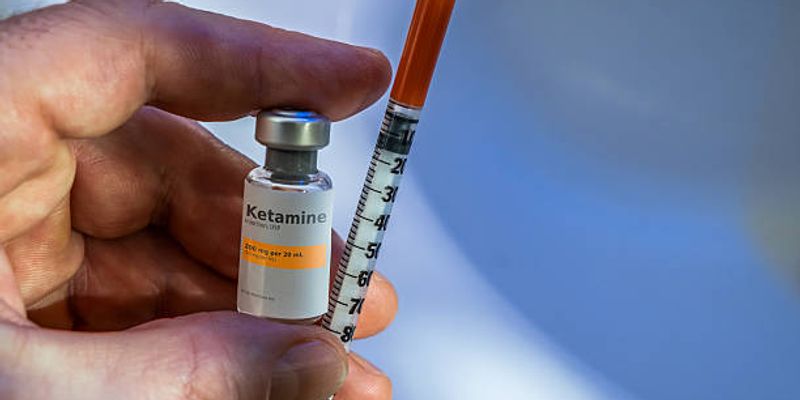
Ketamine Therapy in Irvine, CA: What It Costs, How It Works, and Who It's For
If you've been searching for ketamine therapy in Orange County, you've probably noticed the same thing we did: almost nobody publishes a price. You fill out a form, you wait for a call, and you find out what it costs after you've already invested time in a consultation.
We think that's backwards. So this post does two things. It explains, in plain language, what ketamine therapy actually is and what the evidence does and doesn't support. And it tells you exactly what we charge, on this page, before you talk to anyone.
Rume Health provides physician-supervised ketamine injection therapy at our clinic in Irvine for adults with depression, treatment-resistant depression, anxiety, PTSD, and certain chronic pain conditions.
⚠️ Important: ketamine's psychiatric use is off-label
Ketamine is approved by the FDA as an anesthetic. Its use for depression, anxiety, PTSD, and chronic pain is considered off-label, meaning the FDA has not approved it for these conditions. Off-label prescribing is legal and common throughout medicine when it is supported by clinical evidence and physician judgment. We will discuss this with you in detail before treatment.
The one exception is esketamine (brand name Spravato), a nasal spray derived from ketamine, which the FDA has approved for treatment-resistant depression and is restricted to certified treatment centers under a REMS program. That is a different medication and a different pathway from the injections described here.
If you are in crisis right now
This page is about a scheduled, elective treatment. It is not emergency care. If you are having thoughts of harming yourself, please reach out now:
- 988 Suicide & Crisis Lifeline — call or text 988
- Crisis Text Line — text HOME to 741741
- SAMHSA National Helpline — 1-800-662-4357
- Medical emergency — call 911
What ketamine therapy actually is
Ketamine has been used in hospitals and operating rooms since the 1970s as an anesthetic, and its safety profile at anesthetic doses is well characterized. What changed in the last two decades is the discovery that much smaller, sub-anesthetic doses appear to affect mood through a completely different pathway than conventional antidepressants.
Most antidepressants — SSRIs, SNRIs — work on serotonin and norepinephrine systems, and typically take four to eight weeks to show a full effect. Ketamine works primarily as an NMDA receptor antagonist. The current understanding is that this triggers a cascade involving glutamate signaling and neuroplasticity-related pathways, which may help the brain form new synaptic connections. In the research literature, mood changes have been observed within hours to days rather than weeks.
Two honest caveats belong right next to that:
- The effect is typically temporary. In the studies, a single dose produced improvement that faded over days to a couple of weeks. This is precisely why ketamine is given as a series rather than once, and why maintenance dosing is part of the model.
- It does not work for everyone. A meaningful proportion of people who try ketamine do not respond. We will not tell you otherwise, and we would rather you find that out from us than after you've prepaid for a package.
Ketamine is best understood as one tool within a broader treatment plan — alongside therapy, existing medications, and ongoing psychiatric care — not as a replacement for them.
Conditions we treat with ketamine
- Major depressive disorder, including treatment-resistant depression (depression that has not responded adequately to two or more antidepressant trials)
- Anxiety disorders
- Post-traumatic stress disorder (PTSD)
- Certain chronic pain conditions, including neuropathic pain syndromes
And who this isn't for
This matters as much as the list above. Ketamine is not appropriate for everyone, and we screen carefully before we treat. Factors that may make you ineligible, or that require additional evaluation, include:
- A personal or family history of psychosis or schizophrenia
- Uncontrolled high blood pressure or significant cardiovascular disease
- Pregnancy or breastfeeding
- Active substance use disorder
- Certain liver conditions
- A history of increased intracranial pressure or aneurysmal vascular disease
- No ability to arrange a ride home after each session
If screening shows ketamine isn't a good fit for you, we will tell you during the free consultation — before you've paid anything.
What a session actually looks like
The single most common reason people delay booking is that they don't know what they're walking into. Here is the whole sequence.
Before your first session. You'll have a free 15-minute consultation, then a full intake: medical history, current medications, prior psychiatric treatment, and a review of contraindications. We coordinate with your existing prescriber or therapist where appropriate.
Arrival. Plan for roughly 60 to 90 minutes at the clinic, though the medication itself is a much shorter part of that. Wear comfortable clothing. Eat lightly beforehand and follow the fasting instructions we give you.
Screening and vitals. We check blood pressure and heart rate, confirm nothing has changed since intake, and confirm your ride home is arranged.
The treatment. Ketamine is given as an intramuscular injection — a single injection into the muscle, not an IV line. You'll be in a private, quiet room with dimmed lighting. Many people bring headphones and a music playlist. Effects typically begin within a few minutes.
During. Most people experience a dissociative state: a sense of distance from the body, altered perception of time, visual changes, sometimes a floating sensation. This is an expected pharmacological effect, not a complication. It can feel strange, and for some people it is emotionally intense. A member of our clinical team monitors you throughout.
Recovery. The main effects taper over roughly 45 to 60 minutes. We keep you until vitals are stable and you're steady on your feet.
Going home. You must have someone drive you. You cannot drive, operate machinery, or make significant decisions for 24 hours afterward. This is not negotiable — we will reschedule you rather than let you drive.
Follow-up. Sessions are paired with clinical follow-up so we can track response, adjust the plan, and integrate what came up during treatment.
The protocol
Our standard protocol is:
- One injection per week for eight weeks (the induction series)
- Monthly maintenance sessions thereafter, adjusted based on your response
Eight weeks is a real commitment of time and money, and we'd rather you plan for it up front than discover it after session two.
Safety, side effects, and risks
We'd rather tell you this plainly than have you find it somewhere else.
During and immediately after treatment:
- Dissociation and perceptual changes — the expected effect, but it can be disorienting or emotionally difficult
- Transient increases in blood pressure and heart rate — which is why we monitor vitals and why uncontrolled cardiovascular disease is a screening concern
- Nausea and vomiting — common enough that we pre-treat when appropriate
- Dizziness, blurred vision, headache
- Impaired coordination and judgment for up to 24 hours — hence the driver requirement
With frequent or long-term use:
- Bladder and urinary tract effects. Frequent, high-dose, long-term ketamine use has been associated with ulcerative cystitis and bladder damage. This is documented primarily in recreational use patterns, but it's a real reason we structure dosing conservatively and monitor for urinary symptoms.
- Cognitive and memory effects with repeated long-term exposure.
- Abuse and dependence potential. Ketamine is a Schedule III controlled substance. It has recognized potential for misuse. This is one reason we administer it in-clinic under supervision rather than sending it home with patients, and one reason we screen for active substance use disorder.
A note on at-home ketamine. A number of telehealth companies mail sublingual ketamine for unsupervised home use. We don't do that. In-clinic administration means vitals are monitored, a clinician is present if you have a difficult experience, and the medication stays under supervision. That's a considered clinical position, and we're happy to discuss the tradeoffs with you.
Why patients choose Rume Health
- Prices are published. You just read them. No form-gate, no callback required to learn what it costs.
- Physician-owned and integrated. We aren't a standalone ketamine storefront. Rume Health is a clinic with primary care and behavioral health under the same roof, which means ketamine can be coordinated with the rest of your care rather than running parallel to it.
- Member pricing. Reduced per-session rates for active members — an option most clinics in this market don't offer at all.
- Cash-pay clarity up front. You know before you book that we don't bill insurance, so nobody wastes a consultation discovering it.
Your care team
Aeli Hartmann, NP-C Completed Ketamine-Assisted Psychotherapy Clinician Training (24.75 AANP-accredited contact hours, 2022), including 7.5 hours of psychopharmacology.
Medical supervision provided by Matthew Abinante, DO, MPH.
Frequently asked questions
Is ketamine therapy FDA-approved? Ketamine is FDA-approved as an anesthetic. Its use for depression, anxiety, PTSD, and chronic pain is off-label — the FDA has not approved it for those conditions. Off-label prescribing is legal and widespread in medicine. Separately, esketamine (Spravato), a related nasal-spray medication, is FDA-approved for treatment-resistant depression under a restricted REMS program.
How quickly might I notice a change? The research on sub-anesthetic ketamine describes mood changes emerging within hours to days rather than the weeks typical of conventional antidepressants. Individual experience varies considerably, and some people don't respond at all.
How many sessions will I need? Our standard protocol is weekly injections for eight weeks, followed by monthly maintenance. Your provider will adjust based on how you respond.
What's the difference between IM and IV ketamine? IM (intramuscular) ketamine is a single injection into the muscle. IV is delivered through a line over 40 or so minutes, which allows the dose to be titrated or stopped mid-session. IM is faster to administer, doesn't require IV access, and is generally less expensive. Both routes are used clinically for psychiatric indications.
Will insurance cover it? We don't bill insurance for ketamine therapy. You'll receive an itemized receipt with procedure codes to submit yourself if you'd like to pursue out-of-network reimbursement. HSA and FSA funds are generally eligible.
Do I really need a driver? Yes. You cannot drive for 24 hours after a session. If you don't have a ride arranged, we'll reschedule you.
Can I continue my current antidepressant? Usually yes, but this depends on the specific medication. Bring a complete medication list to your consultation. Certain medications — benzodiazepines among them — may affect your response, and we'll discuss that with you.
Is the dissociation dangerous? Dissociation is an expected effect of ketamine at these doses, not a complication. It can feel unusual or emotionally intense. A clinician monitors you throughout, and the effect resolves as the medication wears off.
Can I get ketamine if I have a history of psychosis? A personal or family history of psychosis or schizophrenia is a significant screening concern, and in most cases ketamine is not appropriate. We evaluate this during intake.
Do you offer at-home or mail-order ketamine? No. All ketamine treatment at Rume Health is administered in-clinic with monitoring.
What if it doesn't work for me? Some people don't respond, and we'll tell you honestly if we don't see a meaningful change. We'll also discuss what else might be worth trying.
How do I get started? Schedule a free 15-minute consultation. We'll talk through your history, whether ketamine is a reasonable option for you, and what the process looks like — with no obligation.
Schedule a free 15-minute consultation
Rume Health 19722 MacArthur Blvd, Irvine, CA 92612 844-540-4357 Book online →
Ketamine is approved by the FDA as an anesthetic. Its use for depression, anxiety, PTSD, and chronic pain is off-label. Individual results vary. Nothing on this page is medical advice or a promise of any particular outcome. If you are experiencing a mental health emergency, call 988 or 911.
Medically reviewed by Matthew Abinante, DO — 7/30/2026 · Last updated 7/30/2026